
FAQ
Answers on water purification methods, Reverse Osmosis, water softeners and Ozone — plus comparison charts against other technologies.
Frequently Asked Questions
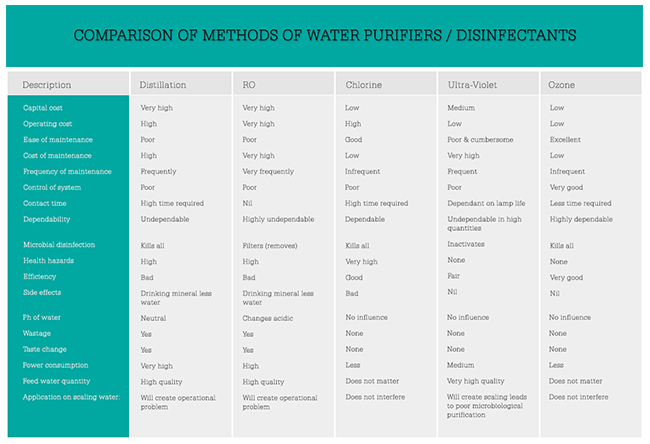
Comparison of Methods of Water Purifiers / Disinfectants
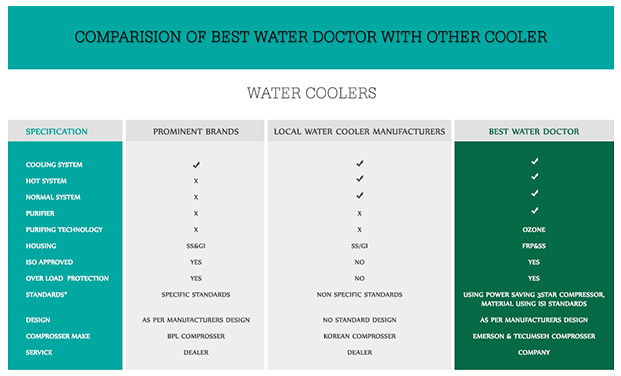
Comparison of Best Water Doctor with Other Cooler
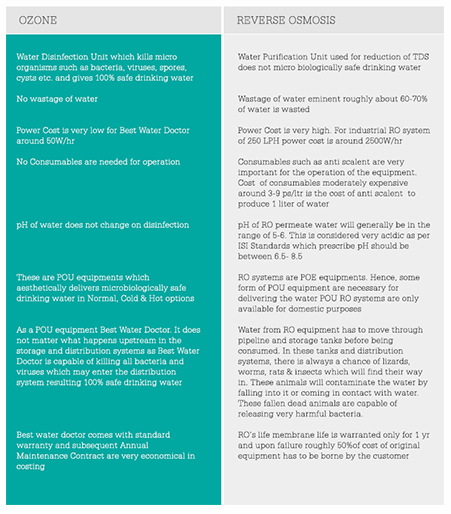
Comparison of Methods of Ozone / Reverse Osmosis
Retro-Fitted Water Coolers
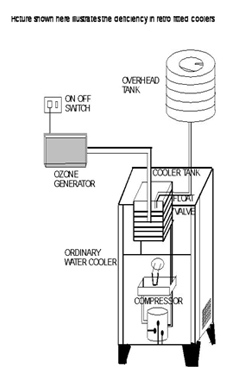
What is a Retro-Fitted Water Cooler?
Basically, it is a compromised situation where the water purifier manufacturer does not make water coolers as well as the water cooler manufacturer does not make water purifiers. It is mainly a make-shift arrangement to cater to your needs.
The Disadvantages of Retro-Fitted Water Coolers
When the water cooler and Ozone generator/UV system operate independently without syncing, the following can occur.
Water Can Be Drawn Even Under the Following Conditions
- Without switching on the Ozone generator/UV system
- In power-off condition
- With Ozone generator failure condition / UV system failure
- Since the two products are bought from different manufacturers, servicing is always a problem — service technicians can end up blaming each other, and as a customer it becomes difficult to know whom to call in a breakdown.
Disadvantages of Retro-Fitted Water Coolers With Ozone
- Since a particular volume of Ozone must be mixed into the water to purify it, there is no advantage in using an Ozone generator for a float-valve-operated water storage system: the volume of water consumed by the public cannot be predicted, so if one bottle of purified water is drawn, another bottle of unpurified water mixes in through the float valve.
- This type of Ozone generator runs on a timer (once every 2 hours) in the power-on condition, so there is a possibility of excess Ozone mixing with the water during holidays or at night when the unit is not switched off during closure.
- The cooler and Ozone generator are not manufactured by the same company, so two different service persons have to be called, and neither will take responsibility when a serious problem arises.
Disadvantages of UV Retro-Fitted Water Coolers
- Water from UV filters has to be consumed immediately on delivery — it cannot be stored, because unlike Ozone or Chlorine, UV has no residual effect. Water stored for consumption, especially after non-use over weekends, becomes a breeding ground for bacteria, viruses and germs.
- UV rays will not kill spores. This is why manufacturers generally recommend that water be consumed as soon as it comes out of the unit — water purified this way cannot be stored at all.
- UV rays inactivate bacteria by working on their DNA and stopping reproduction. Bacteria have a total life of around 20 minutes, and if a bacterium hit by UV rays then passes through a dark area, it can reactivate (though it cannot reproduce). This process only inactivates bacteria but cannot destroy it — so water stored for long periods without additional purification can lead to re-growth.
Anything excess is injurious to health.
Water Disinfection
Two Important Terms Related to Water Treatment
Water Purification: “The act of cleaning by getting rid of impurities.” For water treatment, this term refers to the process of removing specified contaminants from a water source. All effective water treatment methods provide some amount of purification, however only some methods will disinfect the water (Ultrafiltration, Nanofiltration, Microfiltration & Reverse Osmosis).
Water Disinfection: “Killing or removal of microorganisms outside the body by direct exposure to chemical or physical agents or processes.” For water treatment, this term refers specifically to a purification process that kills or removes biological contaminants (cysts, bacteria, viruses, protozoa, etc.) from a water source. Water that has been disinfected (by UV treatment, boiling, chlorination, micro-filtration, ozone, etc.) may still be polluted with other contaminants not affected by the disinfection treatment — in some cases additional contaminants may even be added by the disinfection process itself (for instance, chlorination nearly always adds chlorine and frequently some disinfection byproducts, like chloroform). Boiling water too long will concentrate inorganic contaminants. Sterilization refers to the process of killing or removing all microorganisms.
Water purification is entirely different from water disinfection. Careful consideration is required by the consumer to decide between the two.
FAQs on Reverse Osmosis
1. Can RO water be used directly for consumption?
RO water will be chemically potable, but at times pH correction may be necessary, and with respect to biological contamination, RO is not a proper disinfection process — a suitable disinfectant should be used before consumption.
Moreover, in most places RO water is stored in overhead tanks where the water might get contaminated — even in pipelines, contamination is possible. Hence, a Point Of Use (POU) system that kills bacteria & virus is considered the best form of treatment before drinking, and is almost a necessity.
2. How can Reverse Osmosis be differentiated from other filtration methods?
RO is the most convenient and effective method of water filtration. It filters water by pressing it through a semi-permeable membrane rated at 0.0001 micron (0.00000004 inch) — the same technology used to make bottled water. It's also the only technology capable of desalinating sea water into drinking water.
Non-RO water filters typically use a single activated carbon cartridge, which is much less effective — the pore size on these filter media is generally 0.5–10 micron, so they can only filter out coarse particles, sediments and elements up to their micron rating. Anything finer, and most dissolved substances, cannot be filtered out, so water is far less clean and safe compared to reverse osmosis filtration.
3. Can Reverse Osmosis be used for potable or low-TDS water? If used, what will be its effect?
RO is not advisable for low-TDS or potable water, since that water is naturally low in salts. If used, RO will bring TDS down to a very low level and become aggressive in nature, causing digestive disorders.
4. Will the taste & colour of water change while using reverse osmosis?
Yes — RO will turn salty water into tasty water, and will also remove any colour present in the water.
5. Will Reverse Osmosis remove all the essential nutrients in water?
Yes, RO will remove all minerals in the water. On this issue there is a lot of debate — we'll explain both sides.
1st Group Advises: Drinking RO water will not create problems, since they feel the minerals present in water are minimal and cannot be absorbed by the body anyway — most of the body's nutritional value comes from solid foods rather than water.
2nd Group Advises: Drinking mineral-less water will lead to bone brittleness, and water low in minerals will be aggressive in nature, causing digestive disorders. Both theories remain unproven.
6. Can Reverse Osmosis & other filtration techniques be used for domestic purposes?
Yes, there are small filters available for domestic use.
7. Is there a chance for microbes to grow inside the membranes used in RO systems?
In order to get microbe-free water from an RO system, the plant has to be maintained effectively. For example, in a very large de-salination project, bacteria can form on the membrane, leading to bacteria in the product water — so these big projects use biocides periodically to kill any bacteria or virus present. For normal industrial systems this isn't viable due to cost & manpower, so smaller RO systems are typically used only for TDS removal, not microbiological purification.
8. Does RO remove parasites such as bacteria, cysts or Cryptosporidium?
Bacteria, cysts and Cryptosporidium are all too large to pass through the TFM membrane. NSF's rating for reduction of cysts and Cryptosporidium is 1 micron, but the TFM membrane filters down to 1/10,000 of a micron — a lot smaller than the parasites.
9. Specifically, which contaminants does a reverse osmosis system remove?
A reverse osmosis system can treat a variety of contaminants including: Aluminum, Arsenic, Asbestos, Atrazine, Benzene, Chlorides, Chlorine, Copper, Cryptosporidium, Cyanide, Fluoride, Giardia, Lead, Mercury, Nitrates, Radium, Radon, Silver, Sodium, Sulfide, Trichloroethylene, and Trihalomethanes.
10. Is this the best type of drinking water filter for my water?
It depends on the quality of the source water. If the water is municipally-treated city water low in minerals, less expensive carbon block filtration would be best. If the water is very high in minerals, a reverse osmosis system or distiller that removes minerals, salts and chemicals may be preferred. Generally, people prefer RO since it provides purified, "bottled-quality" water rather than just removing chlorine taste like many filters.
11. How many of the minerals are removed by RO?
In most cases, 95–98% of minerals, salts and other inorganic dissolved solids — such as metals, fluoride, sodium and calcium — are removed by a Thin Film Composite (TFC) RO system.
12. Will RO systems reduce lead?
Yes.
13. Will an RO system remove minerals or help cut down on scale buildup in coffee pots, steam irons, humidifiers, etc.?
Yes — most water contains "total dissolved solids" (TDS), roughly the total inorganic mineral content of the water, and these are greatly reduced. The reverse osmosis membrane separates these dissolved solids and flushes them down the drain.
14. Don't we need these minerals in our drinking water?
According to many experts and studies, only a small percentage of the minerals in water are absorbed by the body — a far better source of minerals is found in foods such as green leafy vegetables, milk, soy products and fish.
15. How does RO water compare with bottled water?
It depends on the bottled water. Many bottled waters use reverse osmosis to purify municipal tap water; some add minerals back in after purification. Some bottled waters filter natural spring water, which can vary widely in mineral content based on the source.
16. How do I know what is in my drinking water?
If you're on city water, your local supply must meet strict Federal and State purity standards. However, many areas use ground water (well water) high in minerals and salts, which can affect taste, and all municipally treated water is chlorinated, which can also affect taste and create odours. If you're on a private well or spring, you should have your water tested, and you may want to contact our technical staff for help selecting the best RO for your water chemistry.
17. Is RO water like distilled water?
Distilled water is boiled and the steam condensed for drinking water, so it contains practically no minerals or dissolved solids, whereas RO water contains trace amounts of minerals and salts. Most people report RO tasting better than distilled water, which can taste flat. Distillers use electricity, whereas RO systems work on line pressure from household plumbing (except commercial and industrial RO systems, which use pumps) and require no electricity.
18. Should the membrane be back-flushed?
Yes. When an RO filter is used strictly for drinking water, only a light demand is placed on the membrane — for instance, a 50 gpd membrane will easily keep a standard 3–5 gallon storage tank topped off. But when the RO filter is used for other applications with larger, frequently-depleted storage barrels, the membrane is placed under heavy demand, so it's advisable to back-flush it regularly.
This involves opening a valve for 3–5 minutes to flush accumulated mineral deposits off the membrane. Water is pressed against the RO membrane and pure water passes through, while salts and minerals are flushed away via the brine reject line. Over time, suspended and precipitated solids accumulate on the membrane, reducing its efficiency — back-flushing removes much of this deposit and ensures optimum membrane life.
19. Beyond reducing health-related contaminants, what are some other benefits of installing a reverse osmosis water system?
Cleaner, sparkling drinking water is probably the most noticeable benefit. Because there's little to alter the RO-treated water's natural state, the flavour of food comes through without any "chemical" taste — brewed items such as coffee, tea or soups may have a richer, more robust flavour, and fruit juices or powdered drinks mixed with RO water may taste better too. Even ice cubes can take on a crystal-clear appearance. Because of its low mineral content, RO-purified water in household appliances such as steam irons and humidifiers can keep them working longer and more efficiently.
20. Does a reverse osmosis system remove biological contaminants?
RO systems are capable of removing certain biological contaminants such as Cryptosporidium and Giardia. The pore size of the RO membrane, along with the pressure applied to the water, generally determines the rate of reduction of such contaminants. The Water Quality Association (WQA) cautions that while RO membranes are reliable for treating a range of health contaminants, design considerations such as tiny seal leaks or manufacturing imperfections may prevent a unit from offering foolproof protection against biological contaminants — so WQA suggests ensuring absolute disinfection (a reduction of contaminants greater than 99.9%) with cyst-rated, certified products and post-disinfection systems such as UV light.
21. Can Microfiltration & Ultrafiltration bring down the TDS content of water?
No. They can only be used for turbidity removal.
22. Will Nanofiltration remove organic & inorganic contaminants from water?
Yes, it can remove both, but the efficiency will be less than 70%.
23. Can Nanofiltration be as efficient as Reverse Osmosis?
Reverse Osmosis is a different kind of filtration technique, used mainly for TDS removal from water.
24. What is the difference between a softener & Nano filters?
A softener is based on the ion-exchange principle, where hardness in the water — mainly Calcium (Ca) and Magnesium (Mg) — is replaced by Sodium (Na).
25. Can these filtration techniques be used for domestic purposes?
Yes, there are small filters available for domestic use.
26. Will contaminants clogged on the surface of the membrane affect the resultant water?
Yes — contamination will definitely affect the permeate water with respect to quantity and TDS level.
FAQs on Softeners
Here is a selection of frequently asked questions, which we hope will answer any queries you may have:
1. What are the effects of hard water?
Scale, scum and tidemarks around baths and basins. The minerals in hard water settle out as an unsightly deposit whenever the water is heated, or when cold standing water evaporates. Examples include:
- Unsightly white marks, stains and scale on sinks, baths, toilet bowls and around the base of taps
- Blocked shower heads
- Scale deposits on all water heating elements
- Clogging of pipe work and premature failure of water heaters
- Water hardness also makes it difficult to get a good lather, so much more soap is required — even after washing, clothes can be left grey and dingy, and dishes and glasses dull or smeared
2. How is hard water softened in the home?
To fully soften water, the minerals (calcium and magnesium) that cause hardness must be removed.
3. How is water hardness removed?
Water hardness is removed by ion-exchange. Fitting a domestic ion-exchange water softener is the only process specifically designed to remove all hardness completely from your mains water supply — the softened water will also gradually remove existing scale from pipe work, bathroom fittings and heating elements.
4. How much does a water softener cost?
The cost varies according to type and size. Unlike other home improvements, the savings provided by a water softener typically produce a payback within 2–4 years.
5. How can I justify the investment?
Most people who have used a water softener would say that washing and bathing in clear, scum-free water is sufficient justification. A water softener also gives substantial savings — reduced water heating bills, protection of bathroom equipment and water-using appliances, and on a day-to-day basis, savings on soap products, cleaning materials and cleaning time.
6. What about servicing and maintenance?
A water softener works 24 hours a day. Because it has few working components, its life is much longer than most other domestic appliances. Servicing frequency depends on the type, age and usage of the softener.
7. Can a water softener be removed and relocated?
Yes, definitely — it's as easy as removing a washing machine or dishwasher and can be moved from home to home. In many cases, a water softener has also helped sell a property due to its protection of the hot water system and bathroom sanitary ware.
8. Why not just soften the hot water?
This isn't economically viable. Although the hot water system would remain scale-free, all the benefits of fully softened water would be lost as soon as any cold, hard water was added.
9. Can softened water be used in car batteries and steam irons?
No — only distilled or de-ionized water should be used in car batteries, and these are also best for steam irons.
10. Are water charges affected by installing a water softener?
No. Installing a softener will not affect your water charges or water charges account.
FAQs on Ozone
Will Ozone change the taste of water?
No. Ozone is pH-neutral — it has no effect on the taste of water.
Will Ozone hurt?
No. The system uses tiny amounts to be effective — Ozone is very gentle to humans and equipment.
Is Ozone convenient in water purifiers?
- Ozone is generated "on site" and is introduced into the water or air automatically
- Ozone does not have to be purchased or stored
- Ozone does not affect the pH balance of water, minimizing pH adjustments
- Ozone helps reduce total dissolved solids in water, so the water doesn't need to be changed as often
- Ozone eliminates much of the routine maintenance, since it does such an effective job keeping the water or air clean
Is Ozone healthy?
- Ozone leaves no chemical by-products in water
- Ozone leaves no chemical taste or smell
- Ozone will not burn eyes or make them red or irritated
- Ozone will not irritate or dry out skin, nose or ears
- Ozone adds no contaminants or by-products to water
- Ozone rids water and air of unhealthy microorganisms
- Ozone is not a carcinogen
Is Ozone safe for the environment as well as equipment?
- Ozone will not explode
- Ozone is not a fire hazard
- In the dose required for excellent purification, Ozone does not produce harmful fumes
- Ozone will not damage plumbing fittings or pipes
What pathogens does Ozone kill in water?
Ozone kills pathogens 3,000 times faster than chlorine. It's also safer, since chlorine can react with blood cholesterol, causing it to coagulate on artery walls and form plaque. Ozonating water kills 99.9% of all bacteria and virus, and is also very effective in killing cysts.
How long has Ozone been used to purify water?
Since the late 1800s.
What are some uses of Ozone?
Some common uses are pool and spa water purification, drinking water purification, waste water purification, air freshening, bedding sterilization, and hospital sterilization.
If my city already ozonates the water, why do I need my own Ozone purifier?
By the time city water reaches your home, new bacteria have already been introduced — older pipes and the lengthy distance water travels from the processing plant can contribute to increased pathogens. Municipal water supplies also contain a large amount of chlorine, which is undesirable in drinking water. With your own Ozone generator, you'll have peace of mind knowing your water has been purified right in your own home, where it will be consumed.
Still Have a Question?
Our technical team is happy to help you pick the right water treatment for your source water.
Contact Us